

To pack clothes for moving efficiently without ruining delicate fabrics or causing severe wrinkles, use tall wardrobe boxes with built-in metal hanger bars for suits and formal dresses, roll everyday cotton t-shirts and denim jeans into tight cylinders to maximize box volume, compress bulky winter coats inside vacuum-sealed storage bags, leave lightweight garments inside sturdy dresser drawers secured with stretch wrap, and pack footwear separately in clear plastic shoe bags at the container base. Never pack dirty or damp garments, as trapped ambient moisture creates mildew and permanent odors in sealed cartons during transport. Partnering with a professional team like Bees Moving ST ensures your entire personal wardrobe arrives clean, organized, and ready to hang in your new bedroom closets.
Essential Supplies and Pre-Packing Preparation
Preparing your personal wardrobe for relocation requires acquiring specialized containers that protect delicate fabrics from dust, moisture, friction, and heavy compression damage. Reviewing transparent moving rates and pricing allows homeowners and renters to budget for specialized wardrobe cartons, vacuum sealers, and protective packing supplies well ahead of moving day.
- Wardrobe Cartons with Hanging Bars: Heavy-duty double-walled corrugated cardboard boxes equipped with sturdy metal hanging bars engineered specifically for direct, wrinkle-free closet transfer.
- Vacuum Compression Storage Bags: Airtight plastic bags designed to collapse bulky winter outerwear, heavy blankets, down parkas, and oversized comforters by removing excess trapped air.
- Standard Medium Moving Boxes: Versatile 3.0-cubic-foot cardboard cartons ideal for folded denim jeans, heavy wool sweaters, cotton hoodies, and boxed footwear.
- Acid-Free Packing Tissue Paper: Soft, non-staining paper sheets placed between delicate silk, velvet, beaded, or leather garments to prevent static buildup and friction damage.
- Industrial Stretch Wrap and Acrylic Tape: Heavy-duty protective plastic film for securing dresser drawers and high-tack adhesive tape for reinforcing box bottom seams.
Gathering commercial-grade clothing containers and protective wrapping supplies prevents garment damage during handling, stacking, and highway transport.
Selecting Proper Boxes, Wardrobe Cartons, and Vacuum Bags
Selecting appropriate containers prevents garment damage and optimizes truck space during transport. Heavy-duty wardrobe boxes maintain critical garment structure for designer suits, formal evening dresses, long leather coats, and tailored blazers, completely eliminating the tedious need to iron clothes after arriving at your destination. Standard medium boxes handle folded casual cotton items and heavy denim, while vacuum storage bags dramatically reduce bulky winter parkas and down coats by up to 75 percent, saving valuable trailer volume and lowering overall moving expenses.
Gathering Protective Wraps, Labels, and Accessories
Protecting fine fabrics requires acquiring clean, professional wrapping materials well before packing begins. Use acid-free tissue paper between delicate silk blouses, beaded gowns, embroidered linens, or leather jackets to prevent static, snags, color bleeding, and friction damage during road travel. Gather color-coded adhesive labels, permanent waterproof markers, heavy-duty zip ties for securing coat hanger clusters, and clear plastic shoe bags to organize footwear and fashion accessories systematically.
Sorting and Purging Your Wardrobe Before the Move
Sorting through your closet before packing eliminates unnecessary weight, reduces container costs, and streamlines unpacking in your new bedroom. Hiring expert local moving services ensures efficient transport, but purging unwanted garments keeps your overall moving budget fully optimized.
- Seasonal Wardrobe Division: Separate spring, summer, fall, and winter attire to identify items needed for immediate wear versus long-term storage cartons.
- Fabric Composition Inspection: Thoroughly check leather, wool, silk, and cashmere garments for pre-existing damage, stains, or moth holes before packing them away.
- The One-Year Rule Application: Systematically identify clothing items that have not been worn during the past 12 months for immediate donation, consignment, or recycling.
- Condition Categorization: Group garments into high-quality items for retention, gently used clothes for charitable donation, and severely worn fabrics for textile recycling.
Eliminating unwanted apparel before packing saves expensive box supplies, reduces physical loading strain, and speeds up closet setup in your new residence.
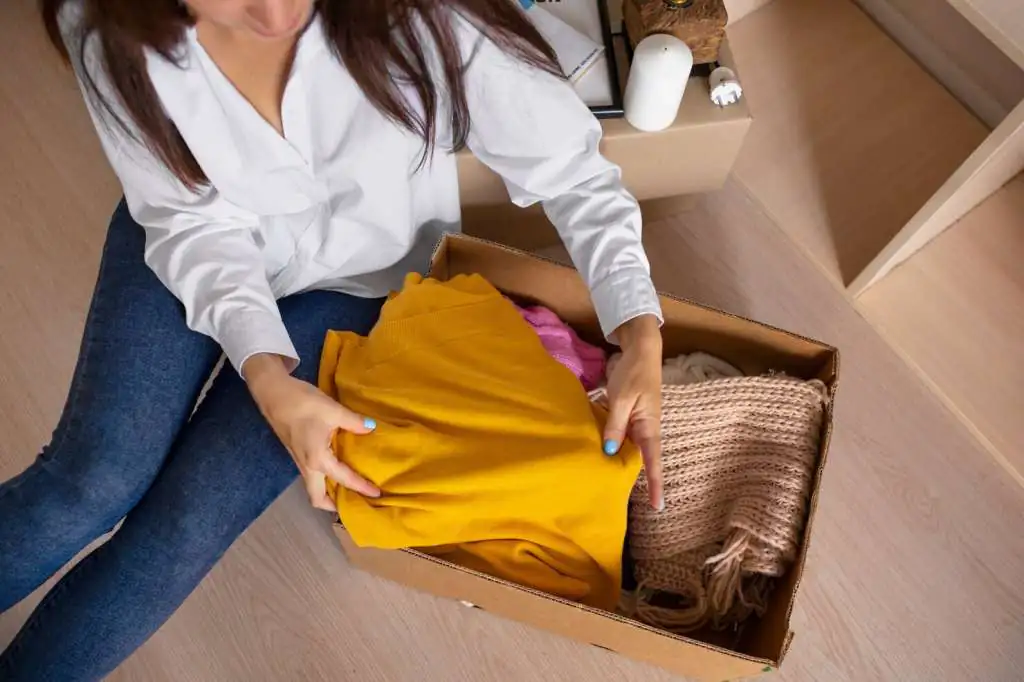
Categorizing Clothes by Season, Material, and Frequency of Use
Organizing garments by season allows you to pack off-season clothes weeks before moving day arrives. Grouping items by fabric weight prevents heavy denim jeans and thick leather jackets from crushing delicate silk blouses, linen shirts, or thin cotton t-shirts underneath. Keep an essential outfit bag containing three to five days of everyday apparel, sleepwear, underwear, and personal toiletries completely separate from main boxes for effortless access during moving week.
Decluttering: Donating, Selling, and Recycling Excess Items
Purging unwanted apparel significantly reduces overall shipment weight and required container counts. Donate wearable, clean items to local community charities, sell high-end designer pieces through online consignment apps or local consignment boutiques, and drop severely worn or damaged textiles at local textile recycling centers. Minimizing overall wardrobe volume creates an organized, fresh starting point for your new home closet while cutting unnecessary packing labor.
Best Packing Methods for Different Types of Clothing
Different clothing fabrics require specialized packing techniques to prevent deep wrinkles, fabric stretching, and moisture buildup during transport. Matching exact packing methods to garment materials preserves fabric integrity across short trips and long journeys alike.
- The Military Roll Technique: Rolling cotton t-shirts, shorts, athletic wear, and casual pants tightly prevents creasing while maximizing interior box volume.
- Flat Folding Standard: Stacking heavy wool sweaters, linen dress shirts, and thick denim flat prevents stretch distortion along fabric seams and collar shoulders.
- Direct Closet Transfer: Transporting hanging items straight from closet rods to wardrobe boxes preserves tailored garment shapes without removing original hangers.
- Drawer Preservation Method: Leaving lightweight clothing inside sturdy dresser drawers wrapped securely in plastic stretch film eliminates extra box usage entirely.
Applying material-specific packing procedures keeps wardrobe items protected against friction, compression wrinkles, and structural distortion during transition.
The Flat Fold Method vs. The Rolling Technique
Rolling garments works exceptionally well for casual cotton t-shirts, synthetic athletic wear, denim jeans, shorts, and casual trousers, effectively preventing deep creasing while filling empty box corners tightly. Conversely, flat folding is strongly recommended for heavy wool sweaters, linen button-down shirts, delicate knitwear, and structured garments that easily stretch out of shape or warp along shoulder seams if rolled tightly into compact cylinders.
Using Vacuum-Sealed Bags for Bulky Winter Wear
Vacuum compression storage bags efficiently collapse bulky seasonal items like heavy down jackets, ski gear, winter coats, wool blankets, and oversized comforters into compact, airtight flat packs. Always ensure every garment is completely clean and thoroughly dry before sealing them inside, as trapped ambient moisture inside airtight plastic bags leads to rapid mildew growth, foul odors, and irreversible fabric degradation during extended transit.
Utilizing Wardrobe Boxes for Hanging and Delicate Apparel
Wardrobe boxes eliminate the tedious necessity of removing clothes from hangers and re-hanging them later, saving hours of preparation time. Transfer tailored suits, formal evening gowns, long leather coats, pressed dress shirts, and silk dresses directly onto the internal metal hanging bar. Place lighter accessories, empty handbags, soft scarves, or extra blankets at the reinforced bottom base of the carton to maximize spatial utility.
Packing Shoes, Belts, and Fashion Accessories
Stuff clean paper into shoes to preserve their structural shape and place each pair inside individual shoe bags to prevent dirty soles from contacting clean apparel. Roll leather belts tightly and nest them inside shoe cavities or empty box corners. Pack delicate jewelry, silk scarves, designer sunglasses, and fashion accessories inside padded storage organizers placed in top box layers to prevent crushing.
Step-by-Step Packing Guide for Specific Garments
Applying tailored packing protocols to specific wardrobe categories preserves valuable garments throughout transit. When planning interstate relocations with long distance moving services, systematic garment protection guards against climate variations and road vibration.
- Formalwear Protocol: Encase tailored suits and delicate gowns in breathable fabric garment bags before hanging them inside heavy-duty wardrobe cartons.
- Everyday Apparel Protocol: Group casual shirts and jeans by category, roll or flat-fold them, and layer them tightly inside medium cardboard boxes.
- Outerwear Protocol: Zip or button up heavy winter coats, compress them inside vacuum bags, or hang them upright in reinforced wardrobe cartons.
- Undergarment Protocol: Place socks, underwear, and brassieres inside small fabric packing cubes or breathable mesh bags near top box layers.
Executing specific garment preparation steps protects delicate fabrics from snags, rough zipper teeth, metal belt buckles, and ambient road dust during handling.
Packing Designer Suits, Dresses, and Formalwear
Protect high-end tailored suits, formal evening gowns, tuxedos, and delicate silk dresses by placing them inside breathable fabric garment bags before hanging them inside wardrobe boxes. Secure groups of five hangers together using heavy-duty zip ties or strong rubber bands at the top hooks to prevent garments from bouncing off the metal hanger bar during highway travel and transit bumps.
Packing Everyday Clothes, T-Shirts, and Jeans
Pack everyday t-shirts, shorts, sweatpants, and denim jeans inside standard medium boxes lined at the base with clean packing paper. Place heavier denim jeans and thick fleece jackets at the bottom of the container, layering tightly rolled casual t-shirts on top, and filling all remaining top voids with crumpled paper padding to eliminate internal shifting during handling.
Packing Off-Season Coats, Jackets, and Heavy Sweaters
Heavy winter outerwear occupies significant container volume if packed loosely in standard boxes. Fold thick fleece jackets, trench coats, and wool sweaters flat, layering them neatly inside medium moving boxes, or compress heavy down parkas inside airtight vacuum storage bags to streamline shipment density and optimize trailer cargo space.
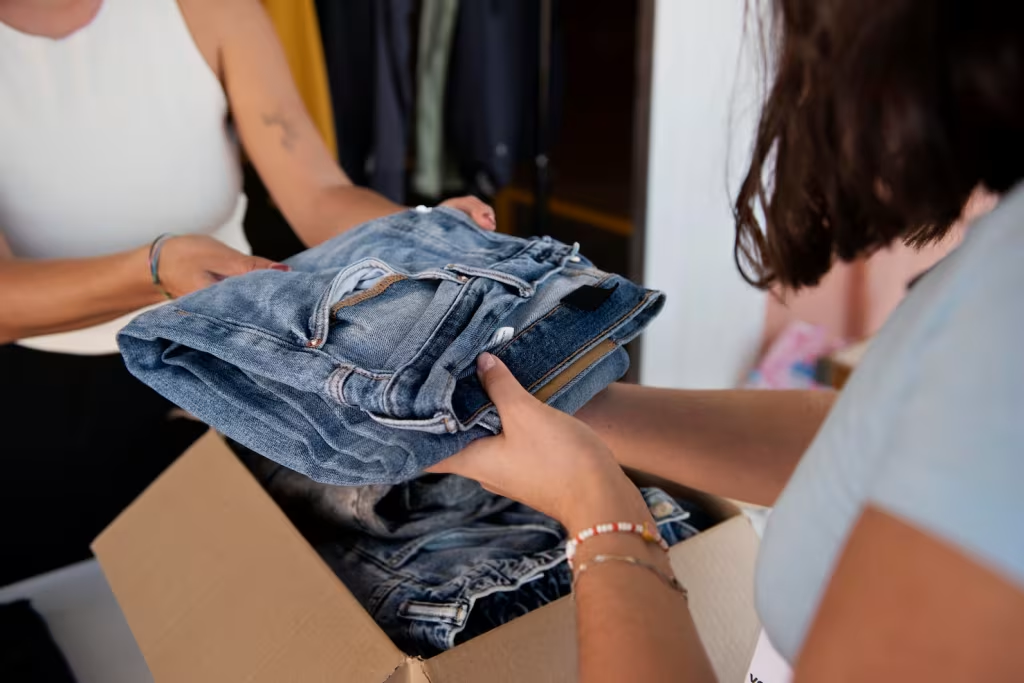
Comparison of Clothing Packing Containers and Methods
Comparing container options and packing techniques helps you select the safest method for your specific wardrobe types and moving budget limits.
|
Container / Method Type |
Max Weight Limit |
Fabric Defense Level |
Ideal Garment Categories |
Primary Operational Benefit |
|
Wardrobe Moving Carton |
50 lbs |
Maximum |
Suits, dresses, coats, silks |
Eliminates wrinkles; no unhanging needed |
|
Medium Moving Box (3.0 cu ft) |
40 lbs |
High |
Folded jeans, sweaters, t-shirts |
Standardized size; easy to stack safely |
|
Vacuum-Sealed Storage Bag |
30 lbs |
High (Airtight) |
Down coats, parkas, winter gear |
Reduces bulky garment volume by up to 75% |
|
Dresser Drawer (In-Situ) |
35 lbs |
Medium |
Socks, underwear, light t-shirts |
Saves extra boxes; keeps clothes in furniture |
|
Trash Bags (Not Recommended) |
20 lbs |
Low |
Emergency workout apparel only |
Extremely cheap, but tears and causes wrinkles |
Selecting specialized wardrobe cartons combined with vacuum compression bags ensures maximum fabric defense while keeping container handling lightweight.
Labeling, Truck Loading, and Unpacking Efficiency
Systematic labeling and strategic truck placement ensure clothing containers are unloaded into correct bedrooms without crushing delicate fabrics. For custom moving estimates or tailored packing guidance, reach out via our contact page today.
+———————————————————————–+
| MOVING TRUCK WARDROBE LOADING WORKFLOW |
+———————————————————————–+
| 1. LOWER TIER (FLOOR) : Heavy Medium Boxes (Denim, Boots, Sweaters) |
| 2. MID TIER (FURNITURE): Dressers with Secured Drawers (Light Items) |
| 3. UPPER RACK (WALLS) : Tall Wardrobe Boxes (Anchored with Straps) |
+———————————————————————–+
- Color-Coded Bedroom Tags: Assign specific colored labels to each bedroom to direct movers accurately during unloading operations.
- Detailed Content Tagging: List specific box contents such as “WINTER COATS” or “MASTER CLOSET HANGING” clearly on top and side panels.
- Lower Truck Placement: Position heavy folded clothing boxes on flat truck floor surfaces or mid-level furniture tops.
- Wardrobe Box Upright Locking: Secure tall wardrobe boxes upright against interior truck walls using industrial ratchet straps to prevent tipping.
Organizing clothing cartons by destination bedroom speeds up home unloading and prevents heavy wooden furniture from crushing lighter clothing containers.
Strategic Labeling and Color-Coding for Bedroom Destinations
Label every clothing box clearly on its top lid and at least two side panels with target bedroom names and distinct color tags. Clearly mark boxes containing immediate essential wardrobe items as “OPEN FIRST / DAY 1 ESSENTIALS” to ensure effortless, stress-free access during your first night in the new home without unpacking entire wardrobe stacks.
Loading Clothes Boxes and Wardrobe Cartons on the Truck
Place heavy boxes containing folded denim jeans, shoes, and winter blankets flat on the truck floor or on top of sturdy wooden furniture like dressers and desks. Position tall wardrobe boxes upright against interior trailer side walls, securing them tightly with tie-down ratchet straps to prevent containers from tipping over lighter surrounding boxes during sharp road turns.
Frequently Asked Questions
Is it better to roll or fold clothes when moving?
Rolling is better for casual garments like cotton t-shirts, shorts, jeans, and synthetic athletic wear because it saves box volume and prevents creasing. Folding flat is recommended for heavy wool sweaters, linen dress shirts, and delicate knitwear that can stretch out of shape if rolled tightly into cylinders.
Can you leave clothes inside dresser drawers during a move?
Yes, you can leave lightweight, non-fragile clothing like socks, underwear, and casual t-shirts inside dresser drawers if the furniture piece is structurally sound. Remove heavy denim jeans or wool sweaters to avoid damaging internal drawer slides, and wrap the entire wooden dresser securely in moving blankets and plastic stretch film.
How many wardrobe boxes do I need for a standard closet?
A standard 20-inch wardrobe box holds approximately 1 to 1.5 linear feet of densely packed closet hanging space. A typical 4-foot closet generally requires 3 to 4 wardrobe boxes, while a large walk-in closet may require 8 to 12 wardrobe cartons for full transfer without crowding hanging garments.
Final Checklist for Packing Clothes Like a Pro
Following a structured wardrobe checklist ensures your personal clothing collection is properly prepared, protected against wrinkles, and easily organized upon arrival.
- Purge Unwanted Apparel First: Donate, sell, or recycle unworn garments to reduce overall shipment weight and container expenses.
- Order Specialized Wardrobe Boxes: Stock tall hanging cartons for formal coats, tailored suits, dresses, and delicate silk apparel.
- Prepare Vacuum Bags for Winter Wear: Compress bulky down parkas, heavy jackets, and ski apparel to save valuable trailer volume.
- Roll Casuals and Fold Heavy Knits: Use the military roll for cotton t-shirts and denim; flat-fold heavy wool sweaters and linen.
- Encase Shoes in Individual Bags: Wrap footwear separately and pack them at box bases to protect clean clothes from sole dirt.
- Label Cartons by Room and Content: Mark box tops and sides clearly with target bedroom names and explicit content descriptions.
- Secure Drawer Furniture with Wrap: Leave lightweight items inside drawers and wrap entire wooden dressers in stretch film.
- Anchor Wardrobe Cartons on the Truck: Position tall wardrobe boxes upright against truck walls and secure them firmly with ratchet straps.
Partnering with certified relocation professionals removes heavy packing stress and guarantees your personal wardrobe arrives in flawless condition. Whether you require full packing support, specialized wardrobe handling, or complete interstate transport, Bees Moving ST delivers dependable, fully insured moving solutions. Contact Bees Moving ST today to request your free, zero-obligation moving estimate!
2026 moving trends: moving checklists are becoming more digital, deadline-driven, and inventory-focused. For the smoothest move, confirm elevator reservations, parking permits, utility transfers, packing priorities, and donation or disposal plans early, then keep a shared checklist updated on your phone so every important task stays visible before moving day.